









Payment For Returned Bottles
Everything you need to know
from handling fees to Epos data
The Fed can support Retailers to understand how deposits are collected and refunded under the DRS.
The Fed’s dedicated team is on hand to guide retailers through the process, explain the available options and help you prepare for DRS.
We can help you make sure staff know how to process returns, issue refunds and explain the process to customers. Plan how refunds will be managed at the till or return point to keep transactions simple and efficient.
What you need to know
Handling fee
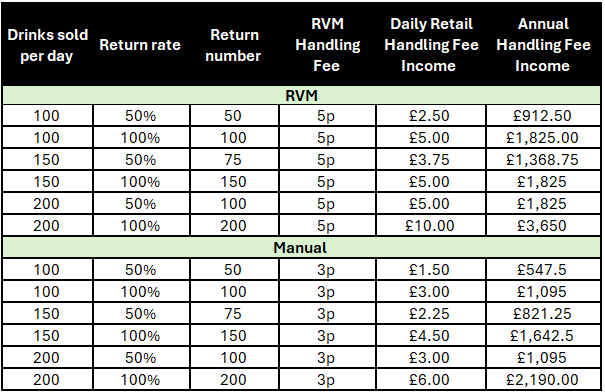
- These will be 5p per container up to 225,000 per year (roughly 610 items per day) for items returned by RVM. After this it will be 1.3p per item (though this lower fee is not likely to apply to small independent retailers).
- It will be 3p per item for items returned by Manual Handling.
Returns
Will be made in official Exchange for Change bags which are securely labelled and tied.
Reimbursement
More details will be announced on how this will work, though EfC-compliant RVMs and Smart bins should track return quantities to allow efficient payment of the retail handling fee.
Cost risk
There remains a financial risk associated with participating in DRS, so retailers will need to consider how they promote DRS to ensure that they maximise the number of returns from customers – and potential customers – in their communities.
Potential returns from an RVM or Manual Return Point
Even if you are able to qualify for a grant for an RVM, there is likely to be a significant cost associated with an RVM and that will need to be weighed against your income associated with bottle returns.
Epos data
You can use your current sales data to forecast your likely handling fee income from DRS. You can then use these to cross-reference against your costs associated with your return point (see example below).