











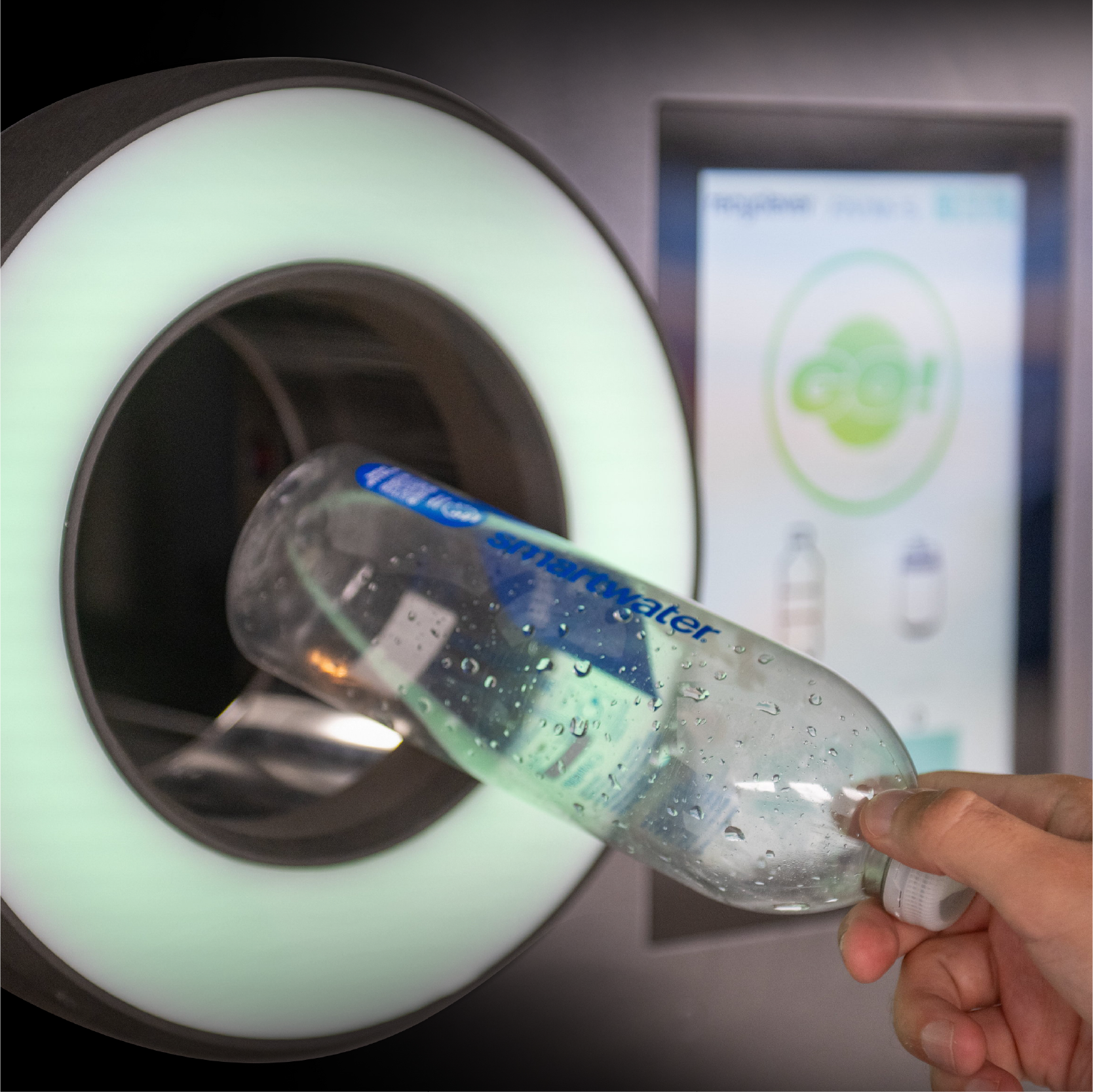


What is DRS?
The Deposit Return Scheme explained
The Deposit Return Scheme has been in the works for several years, but now is close to launch in October 2027 and the Fed is urging members to get ready.
It will involve the addition of a refundable deposit of 20p per bottle and can to encourage consumers to return items for recycling. This means a can of Coke will have an overall price 20p higher, but also that a multipack of 8 beers will be £1.60 higher.
Phase 1 registration, overseen by Exchange for Change, needs to be
completed by December 31st 2026.
Click here to register now.
Frequently Asked Questions
What bottles and cans are included?
From 1 October 2027, the scheme covers single-use drinks containers between 150ml and 3 litres made from:
- Plastic bottles (PET, the clear plastic used for water, fizzy drinks and juice)
- Aluminium cans
- Steel cans
If you sell drinks in these containers, a deposit will be added to the price, and customers can return the empties to get the deposit back.
What isn’t included?
- Milk bottles and other drinks in HDPE plastic (the opaque, cloudy plastic)
- Cartons, such as juice or milk cartons
- Pouches and sachets
- Refillable or reusable containers
- Liquid medicines
- Cordials, syrups and drink flavourings
- Drinks under 150ml or over 3 litres
What about glass?
England, Scotland and Northern Ireland: glass bottles are not included.
Wales: glass is included in the Welsh scheme, but there is a four-year transition period. Until around 2031, customers won’t pay a deposit on glass and can’t return it for a refund.
If you trade in England, you don’t have to accept items that are only in the Welsh scheme, such as glass bottles bought in Wales.
Why retailers like Fed members should prepare now
All convenience and supermarket retailers selling single-use bottles and cans will need to register for Exchange for Change. Depending on their floor area, they may need to introduce a return point, or seek an exemption from participation.
Despite delays in the past, DRS is definitely happening and it will impact retailers, whether or not they have a return point because it will almost certainly affect footfall.
Get ready now
Check your Epos data to see how many in-scope bottles and cans you sell now, as that is likely to reflect how many items you are likely to have returned under the DRS scheme.
Thousands of retailers across the UK will be installing return points in advance of the launch in October 2027, so please don’t leave your decision about DRS to the last minute, when there may be a rush to install the machinery you may need and there could be installation delays.
Exemption?
Retailers can seek an exemption from DRS if they are 200 sqm (2,152.8 sqft) or less and are in a rural location.
If they are in an urban area, with a footprint of 100 sqm (1,076.4 sqft) or less, they are automatically exempt but can claim an exemption up to 200 sqm (2,152.8 sqft).
Click here to establish whether you are in a urban or rural location.
If you are eligible to apply for an exemption you will be able to apply in January 2027.
Handling fees
These will be 5p per container up to 225,000 per year (roughly 610 items per day) for items returned by RVM.
It will be 3p per item for items returned by manual handling.
Grants for RVMs
Many members will qualify for £6,000 grant, depending on certain criteria that are being finalised, but this will only apply to RVM return points, not manual handling or smart bins.
According to information shared by Exchange for Change:
- Grants will be available for retailers who install an RVM in rural areas in shops of a floor area up to 200sqm – or in urban greater than 100sqm and less than 200sqm.
– 4,000 of each of these will be open for application in Q1 2027 – representing 8,000 of the 10,000 total.
– Retailers can check whether there is area considered “rural” or “urban” by entering their post code on the following link: https://exchangeforchange.co.uk/postcode-lookup/ - Grants will not be available to cover costs associated with installing a Manual Return Point, including a Smart Bin that does not compress bottles or cans.
- A further 2,000 grants are scheduled to be made available from Summer 2027 for those not covered by the initial grant scheme.
- Retailers are considered independent if they operate three stores or fewer.
- Both unaffiliated independents and those trading independently under a fascia group will be eligible, assuming other criteria apply.
- The full grant criteria is available on the Exchange for Change website, ਇਥੇ.
- The Fed will share further information about the application process once it launches in January but we are calling on Exchange for Change to make the process as smooth and easy to participate in as possible.
Exchange for Change
Exchange is the UK Deposit Management Organisation (UK DMO), a not-for-profit, industry-led body appointed to design and run the national Deposit Return Scheme (DRS). The Fed sits on the Advisory Board of Exchange for Change and we frequently pass on feedback from Fed members to Exchange for Change.
What to do next?
Follow the guidance on this hub on how you can prepare for DRS.
Get in touch if you have any questions about what DRS will involve by email: douglas.oliver@nfrn.org.uk