













What is a DRS?
Understanding what DRS means for your business
In October 2027, the UK’s deposit return scheme (DRS) will go live across England, Scotland and Northern Ireland.
This marks a landmark moment in efforts to reduce litter, improve recycling rates and build a more circular economy. With just over 18 months to go, planning is accelerating to deliver a deposit return scheme that is as effective as it is efficient.
At the heart of this national scheme is Exchange for Change, the new trading name of the UK Deposit Management Organisation (UK DMO), set up by-industry for-industry to design, operate and manage the scheme.
Need to know
What is a DRS
The principle behind a DRS is simple: consumers pay a deposit on in-scheme drinks containers at the point of purchase, which they get refunded when they return the empty container. It’s a model already used in more than 50 countries around the world, and according to environmental NGO Reloop, the average return rate for European countries with a DRS is 90 per cent.
According to the UK government, an estimated 6.5 billion single-use plastic bottles and cans every year end up in landfill or as litter. A DRS changes that dynamic, giving empty drinks containers a value and making recycling them a part of the transaction.
For retailers, that means being part of a new collection network that ensures those valuable materials make it back into the system, not onto our streets, countryside or waterways.
Who is Exchange for Change?
Its purpose is to make sure the scheme works in practice for consumers, retailers, producers, wholesalers and hospitality.
It will design and run the systems that enable businesses to collect empty drinks containers, manage returns, and process deposits in a way that is reliable, convenient, and scalable. While the scheme must work for consumers, it is shaped by the retailers, producers and operators who will actually deliver it day to day.
How will the scheme work?
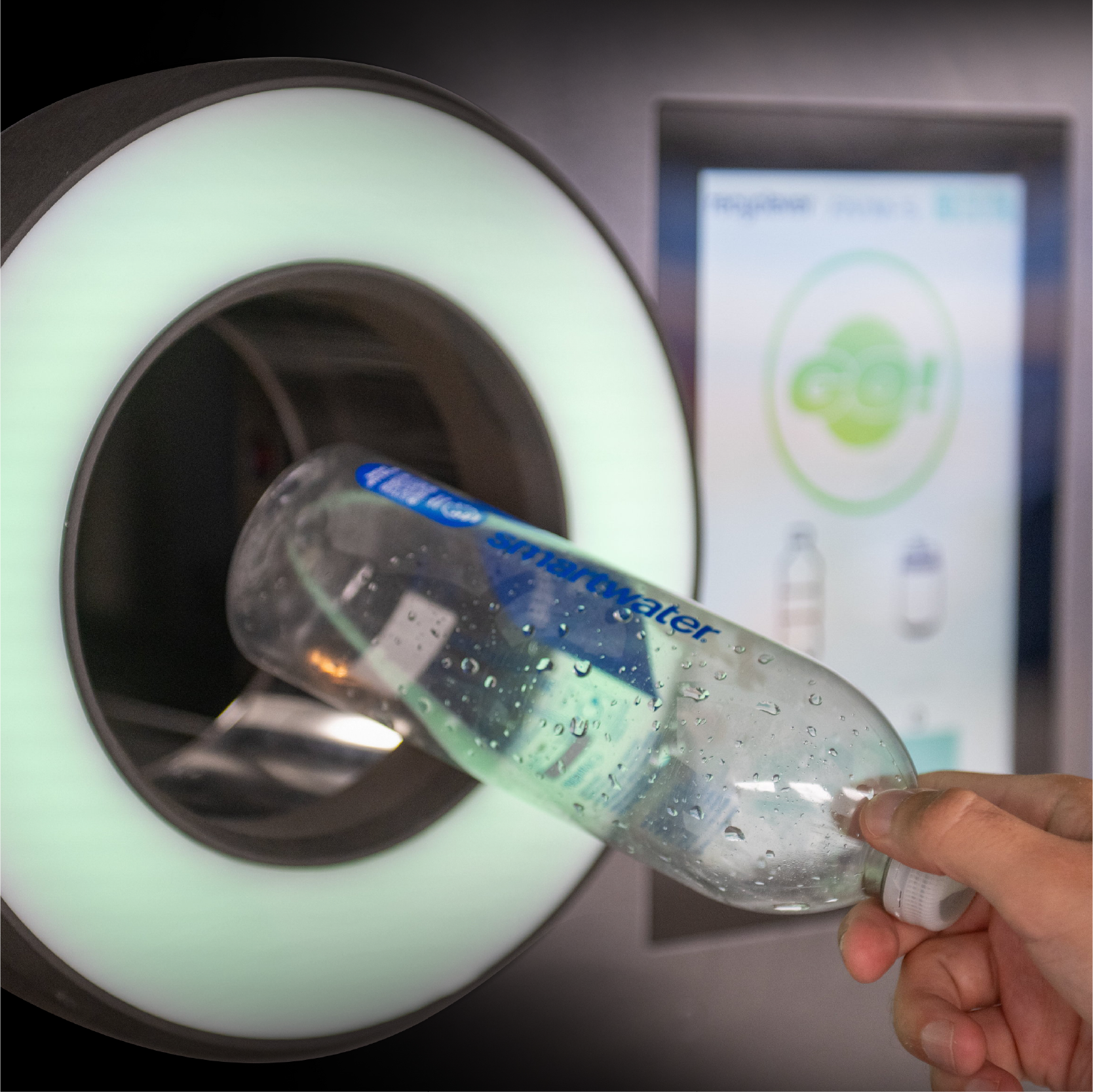
The DRS will apply to single-use drinks containers made from PET plastic, aluminium and steel, ranging in size from 150ml to 3 litres. At the till point, consumers will pay a deposit on these containers, which will be redeemed to them when they return the container, either via a reverse vending machine (RVM) or manual return point.
As per the regulations, not every store will be required to take returns. Grocery retailers under 100m² in urban areas will be automatically exempt, and others can apply for exemption based on proximity to another return point or practical constraints. But those who do take part will receive a retail handling fee for every container accepted, compensation to mitigate the cost and encourage participation.
Convenience stores are vital to the success of the scheme, especially in rural and island communities where larger return points may not be viable. That’s why Exchange for Change is focused on ensuring that the scheme remains practical, fair and inclusive. Retailers will have options to take part manually or with automatic reverse vending machines, with exemptions available where appropriate.